Waveform Generator Circuit Diagram This function generator a.k.a waveform generator can produce square wave (5V/0V) with frequency ranging from 1Hz to 2MHz, the frequency of the wave can be controlled by a knob and the duty cycle is hardcoded to 50% but it is easy to change that in the program as well. Apart from that, the generator can also produce since wave with frequency It is a DDS type programmable waveform generator, so it takes a clock signal with a maximum frequency of 25MHz (for this particular IC), which it then divides based on a value passed by the microcontroller (maximum 2 28) via the SPI bus, and using a 10-bit DAC it outputs a waveform chosen by the microcontroller. The output has a peak-to-peak
DIY Function/Waveform Generator: In this project we will have a short look at commercial function/waveform generators in order to determine what features are important for a DIY version. Afterwards I will then show you how to create a simple function generator, the analog and digit… Need to test circuitry but don't have a waveform generator? A DIY signal generator that measures arbitrary waveforms is easy and affordable to make using the PBB-272C powered breadboard and a few other tools. To create our analog function generator circuit, we will use a 555 timer to create a sine wave signal. Through analysis, devise your own signal generator, capable of generating following waveforms of desirable amplitude and frequency: 1. Square wave (bonus for varying duty cycle) 2. Sine Wave 3. Sawtooth Wave The signal generator design should include the capability to adjust signal frequency and amplitude.

10 Useful Function Generator Circuit Diagrams Explained
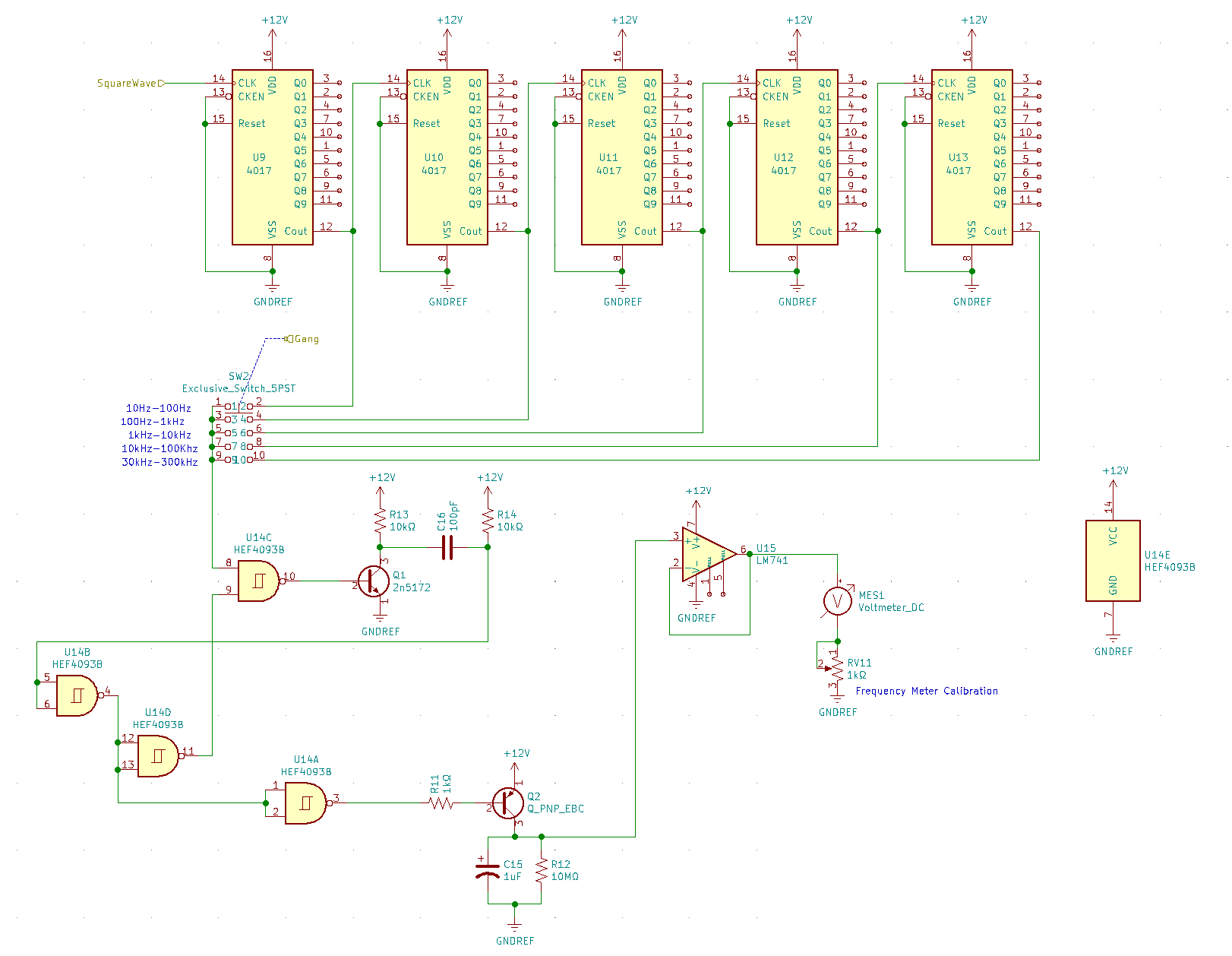
A Function generator , often known as Wave-form generator is a circuit that produces a variety of different wave-forms at a desired frequency. Function generator is one of the important devices in laboratory when it comes to generating electrical waveforms like sine, triangle,square or pulses over a range of frequencies, amplitude and duty cyle. So after the first op amp, we have a square waveform. What follows next is an integrator circuit. When you feed a square waveform into an integrator circuit, the output is a triangle waveform. So after the second op amp, we now have a triangle waveform, as our second waveform. We then feed this triangle waveform into another integrator circuit. This IC 741 based function generator circuit delivers increased test versatility compared to the typical sine wave signal generator, giving 1 kHz square and triangle waves together, and it is both low-cost and very simple to construct. As it appears the output is approximately 3V ptp on square wave, and 2V r.m.s. in the sine -wave.