Electronics Engineering Asst Prof Dr Alper MAN Circuit Diagram When deciding between analog and digital circuits for a particular application, engineers must consider several factors: 1. Signal type: If the input or output signals are inherently analog, such as sound or light, analog circuits may be more appropriate. If the signals are discrete or the application requires complex computations, digital

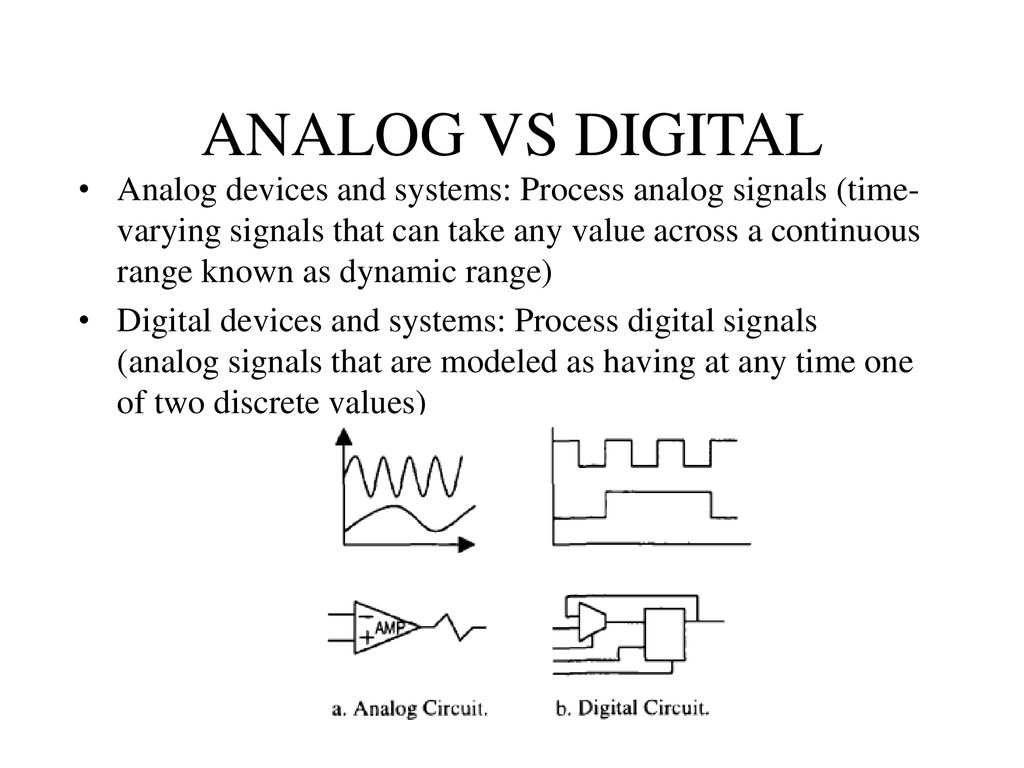
Learn the basic concepts and examples of analog and digital circuits, how they work, and what are their advantages and disadvantages. Analog circuits use continuous signals, while digital circuits use discrete signals and logic gates.
Analog vs Digital: What's the Difference? Circuit Diagram
Learn the differences between analog and digital circuits based on the signals they process and the components they use. See examples of simple analog and digital circuits and their applications.

Analog circuits can be very elegant designs with many components, or they can be very simple, like two resistors combining to make a voltage divider.In general, though, analog circuits are much more difficult to design than those which accomplish the same task digitally. It takes a special kind of analog circuit wizard to design an analog radio receiver, or an analog battery charger; digital
Analog vs Digital Circuits: The Differences and Similarities Circuit Diagram
Learn the key differences between analog and digital circuits, how they process signals, and what are their advantages and disadvantages. Compare the circuit components, input and output signals, power consumption, accuracy, and more.
